IMIQ - Intelligent Mobility Space in the Quarter
Overview
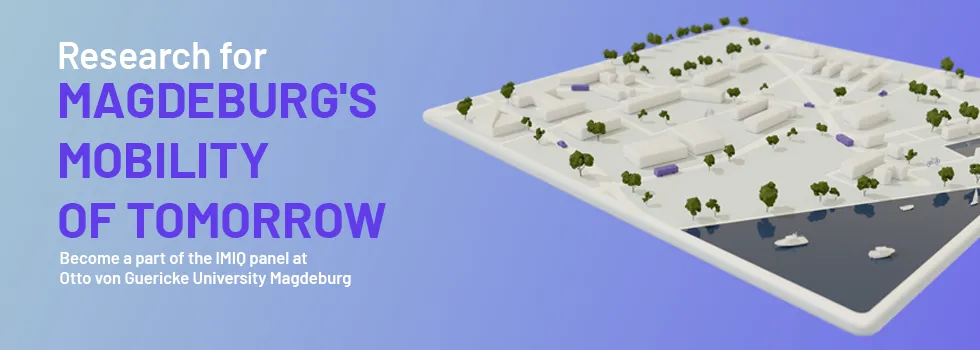
"IMIQ - Intelligenter Mobilitätsraum im Quartier" ("Intelligent Mobility Space in the Quarter") is a project by the IMR, which is located at the Science Port in Magdeburg. During its scheduled duration (2024-2028), the Science Port becomes a district of the future, where new, user-focused solutions are conceived, technically tested, and socio-economically implemented.
More information can be found under The Project.
The project is funded by EFRE - European Regional Development Fund.
Involved parties:
- Prof. Dr. Andreas Wendemuth, Cognitive Systems
- Prof. Dr. Ellen Matthies,
Environmental Psychology
- Andreas Müller, Digitales Anwendungszentrum GALILEO Mobilität. Logistik. Industrie.
- Prof. Dr. Benjamin Noack, Autonomous Multisensor Systems
- Prof. Dr. Andreas Nürnberger, Data & Knowledge Engineering
- Prof. Dr. Hartmut Zadek, Logistics
- Dr. Leander Kauschke, Coordination
- Dr. Anja Köbrich, Supporting Research
News
→ Visit our LinkedIn page for more updates.
LinkedIn Post September30th 2026
⏰ Last chance to register!
Don't miss the opportunity to join our IMIQ Research Conference "Places of Tomorrow" and explore the future of intelligent mobility.
📅 Registration closes on 2 October 2026!
Places of Tomorrow: Reserach Conference on Intelligent Mobility
#MagdeburgsMobilityOfTomorrow #SmartMobility #Mobility #smartcity #Magdeburg
LinkedIn Post September29th 2026
Can autonomous vehicles help make urban logistics emission-free?
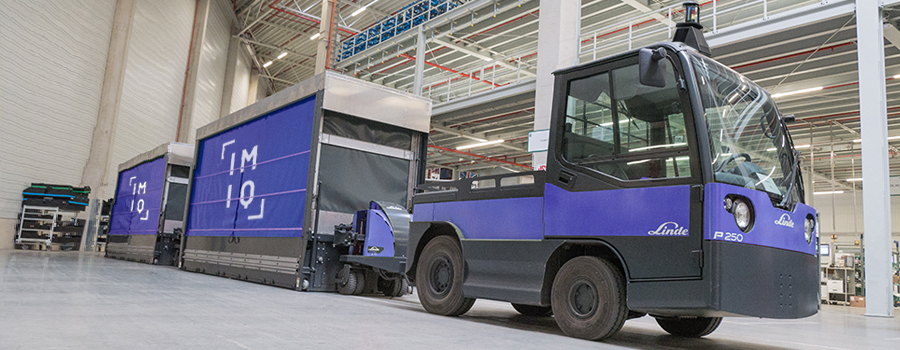
IMIQ is testing an autonomous route train in the Science Port as part of its Living Lab.
The train consists of a towing vehicle equipped with the required sensors and two to three automatically connectable trailers. It will be used to distribute mobile parcel stations and will be monitored and controlled from the Operation Control Center.
Hashtag#MagdeburgsMobilityOfTomorrow Hashtag#SmartMobility Hashtag#Mobility Hashtag#smartcity Hashtag#Magdeburg
LinkedIn Post September22nd 2026
Great insights from Aveiro! 🇵🇹
The exchange around traffic management, awareness-raising, and stakeholder engagement for autonomous vehicles connects closely with what we're exploring at IMIQ in Magdeburg's Science Port around intelligent and connected mobility. Always valuable to see how other regions are testing these ideas in their local living labs. Thanks for sharing, Interreg Europe - SMARTAUTO-Team! 👏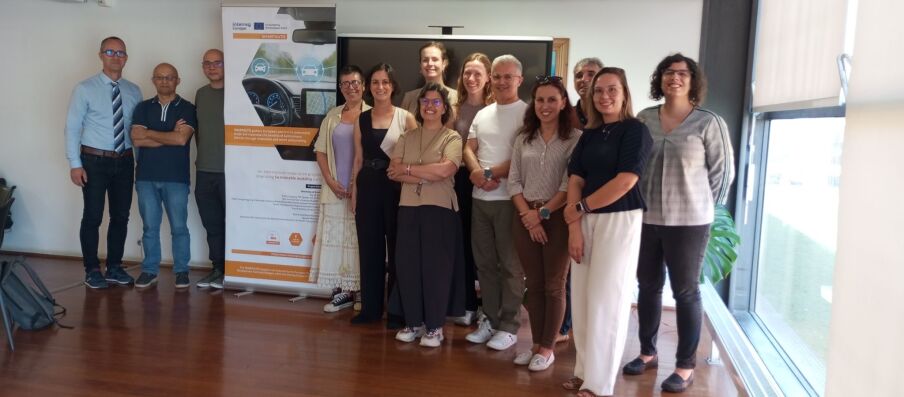
Hashtag#MagdeburgsMobilityOfTomorrow Hashtag#SmartMobility Hashtag#Mobility Hashtag#smartcity
Hashtag#Magdeburg Hashtag#IMIQ Hashtag#SMARTAUTO Hashtag#InterregEurope Hashtag#AV Hashtag#KnowledgeTransfer